
How to Pick the Right Blinds for Bay Windows
Published 8/14/2026
Bay windows can make a room feel brighter, larger, and more distinctive. They bring in extra light, create dimension, and often become a natural focal point in the space. At the same time, they can be more complicated to cover than standard windows. The angles, spacing, and depth of a bay window all affect which window treatment will look and function best.
Choosing the right blinds for bay windows usually comes down to a few key factors:
- the layout of the bay window
- the amount of light and privacy needed
- the style of the room
- how cleanly the treatment fits the window shape
Start with the Bay Window Layout
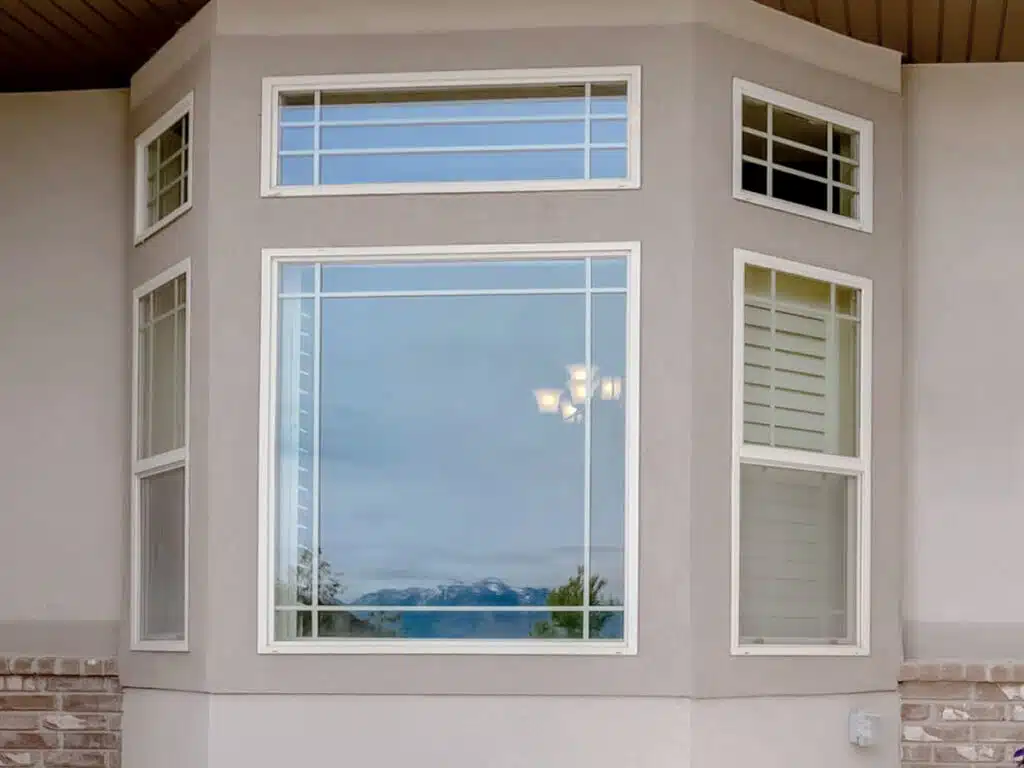 Not all bay windows are built the same way. Some are made of three joined sections with tight spacing between each window. Others have thicker wall sections between the windows, which creates more flexibility for mounting treatments.
This matters because tighter angles and limited depth can affect headrail fit and how well certain products work side by side. Traditional joined bay windows often need more careful planning, while separated bay windows usually allow more options. Curved or unusually deep bay windows may also need more customized measuring and planning.
For that reason, measuring is one of the most important parts of the process. A bay window treatment should not only fit each section correctly, but also work well as a whole when the full window is viewed together.
Think About Light Control and Privacy
Bay windows usually bring in more natural light than a standard flat window, which can be a major benefit. The right treatment depends on whether the goal is soft filtered light, adjustable privacy, or stronger light blocking.
Blinds are often a strong option when flexible light control matters most. They make it easier to adjust brightness throughout the day without fully raising the treatment.
Shutters can work well when the goal is a more structured, architectural look with dependable privacy and light control.
Roller shades are often a better fit when the room needs a cleaner, more modern finish with different fabric opacity options.
Best Blinds for Bay Windows
Ultimate™ Faux Wood Blinds
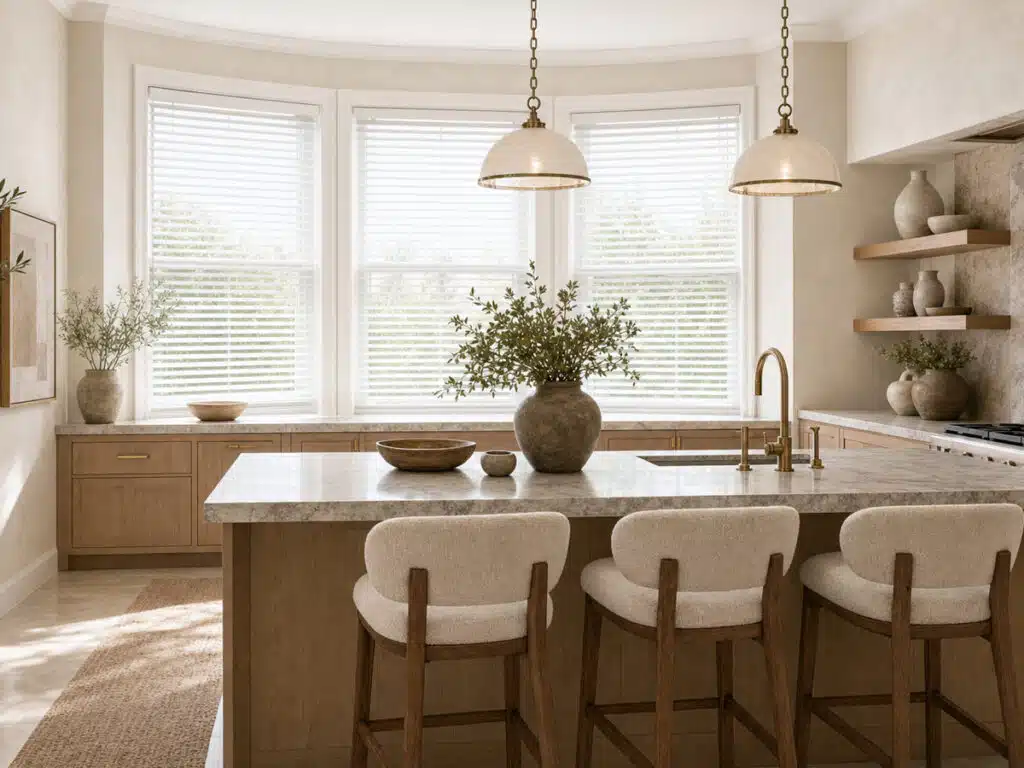 Ultimate™ Faux Wood Blinds are a strong option for bay windows when privacy and light control are a priority. One reason is the SmartPrivacy® design, which places the route holes at the back of the slat instead of through the center. That helps reduce light leakage and creates a tighter closure than traditional blinds.
They also feature a pivoting bottom rail that helps improve closure when the blinds are lowered. In a bay window, that can be especially helpful in rooms that receive a lot of sunlight or need more privacy in the evening.
Because they are faux wood, they also offer a practical balance of appearance and durability for everyday use.
Woodlore® Shutters
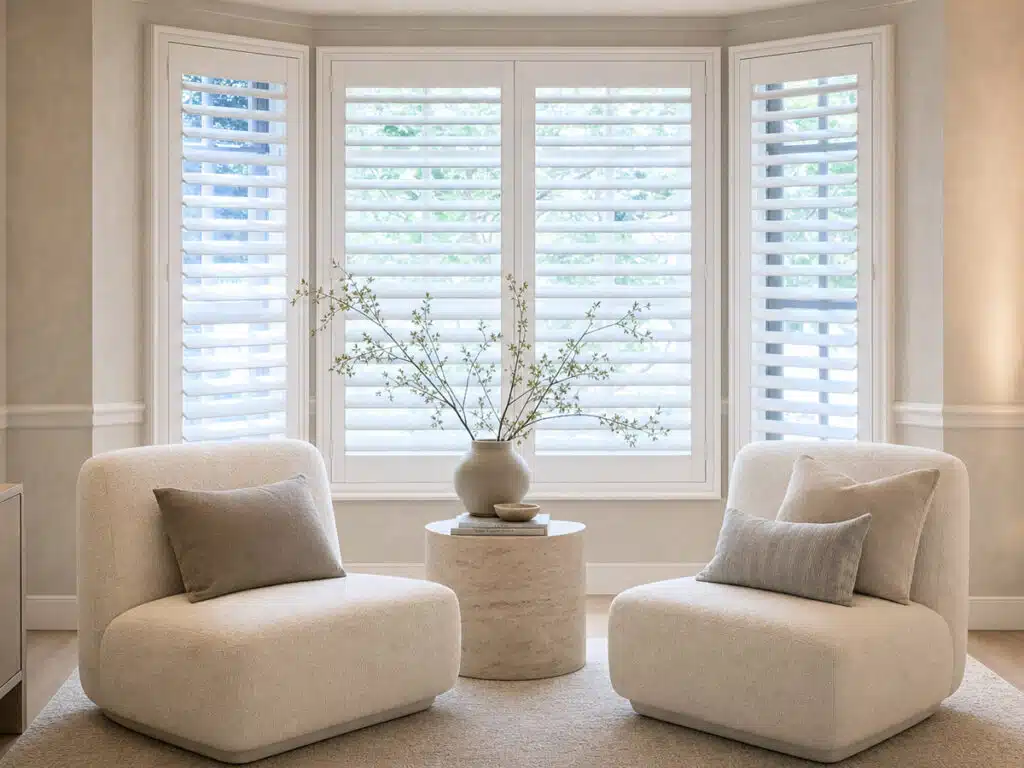 Woodlore® Shutters are a strong fit for bay windows when the goal is a more timeless, built-in look. What makes them especially relevant here is that bay posts are available for bay window applications. These help create a more cohesive appearance across multiple angled sections, so the finished result feels more intentional and unified.
Woodlore® also stands out for durability. The composite construction is designed to resist sagging, cupping, warping, staining, fading, and yellowing. That makes it a practical choice for homeowners who want a more architectural solution that still performs well over time.
Soluna™ Roller Shades
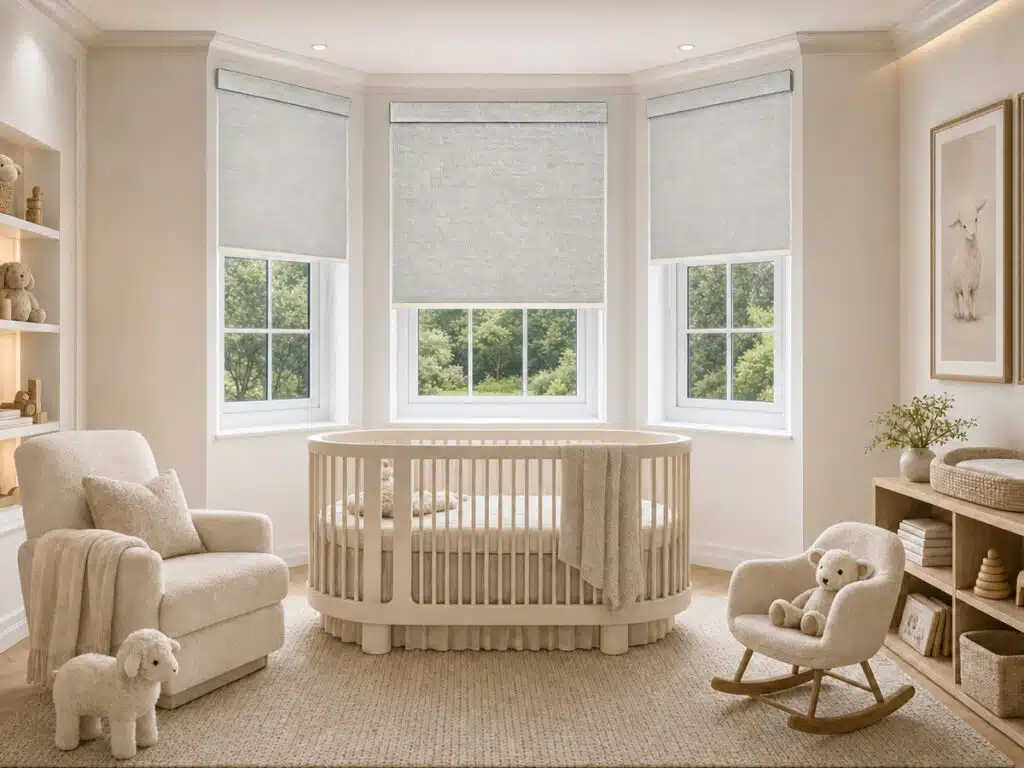 Soluna™ Roller Shades are a strong option for bay windows when a cleaner, more modern look is the priority. They offer a sleek appearance and come in a range of fabrics with different levels of light control and privacy.
They also feature PrecisionLift™ Cordless, which helps make daily adjustments easier without visible cords. For stronger privacy and light control, select applications also offer LightGuard 360™, which helps reduce light gaps along the sides and top.
That combination makes Soluna™ Roller Shades a good fit for bay windows in living rooms, bedrooms, or other spaces where the goal is a simpler look with cleaner coverage.
Centerpiece™ Roman Shades
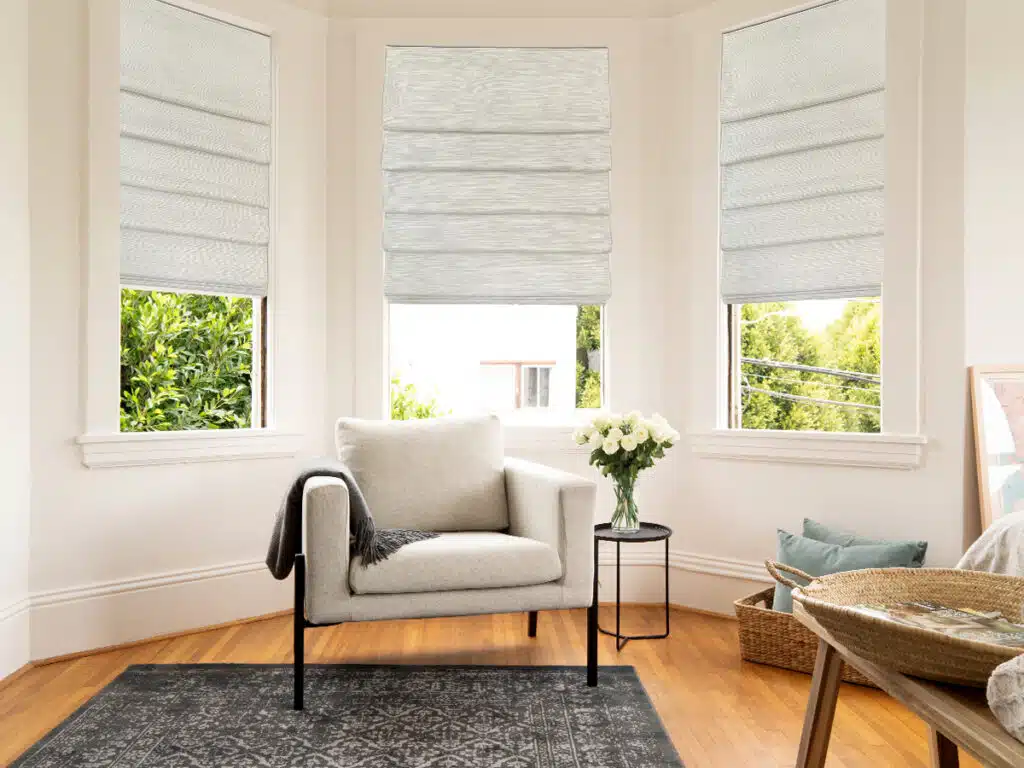 Roman shades are a beautiful choice for bay windows, bringing softness and warmth to the space without overwhelming its architectural character. For a clean, tailored look, consider a Flat Fold with Batten Back style. The battens provide structure and support to the fabric, helping each shade maintain a crisp, smooth appearance while keeping the front free of visible seams or interruptions. Installed individually within each section of the bay window, Roman shades also offer flexible light control while creating a polished, cohesive look across the entire window.
Match the Treatment to the Room
The best treatment for a bay window also depends on how the room is used.
In a living room, filtered light and a polished appearance may matter most. Roller shades or shutters can both work well depending on whether the room should feel more modern or more architectural.
In a bedroom, stronger privacy and light control often matter more. Faux wood blinds with tighter closure or roller shades with stronger light-blocking features may be a better fit.
In a dining room, the visual impact of the bay window may be part of the room’s style, which can make shutters an especially appealing option.
Mistakes to Avoid with Bay Window Treatments
A few common mistakes can make bay windows harder to cover well.
These include:
- treating a bay window like a standard flat window
- skipping professional measurement
- choosing a bulky treatment for tight angles
- focusing only on appearance without considering headrail fit
- overlooking how much privacy and light control the room actually needs
Bay windows can look beautiful with the right treatment, but they usually need more planning than a standard window.
Find the Right Bay Window Treatment
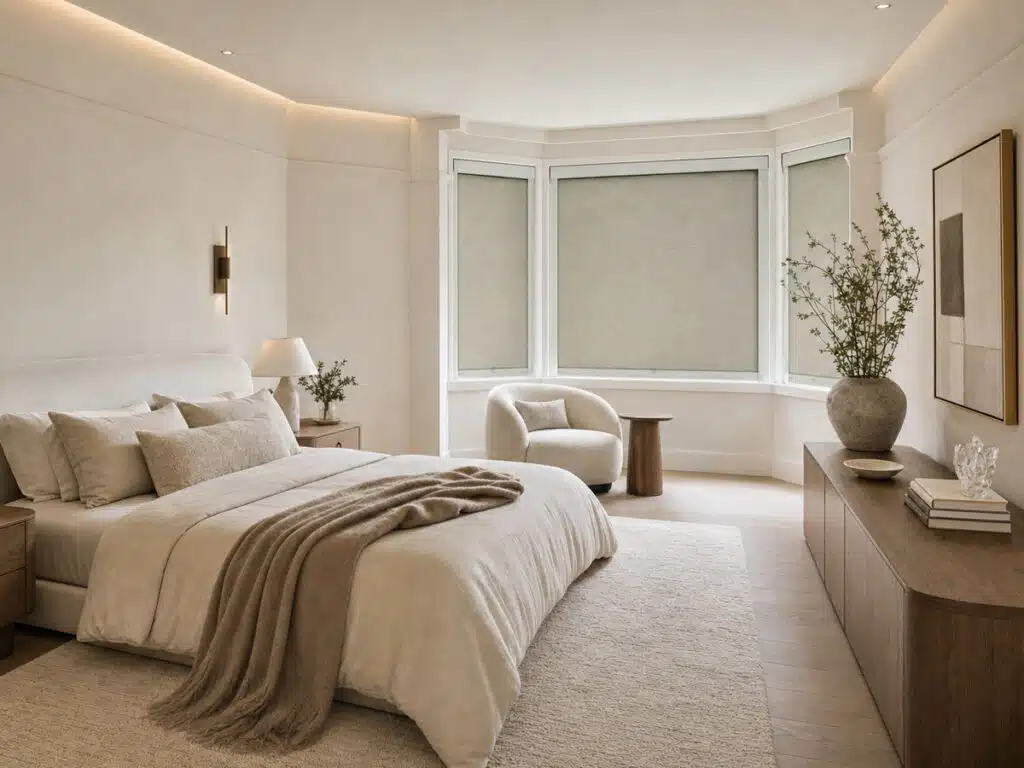 The best bay window treatment should do more than fit the shape of the window. It should also support the room’s privacy, light needs, and overall style.
Whether the best fit is the tighter closure of Ultimate Faux Wood Blinds, the cohesive architectural look of Woodlore Shutters, or the sleek simplicity of Soluna Roller Shades, the right choice is the one that works with the bay window’s layout and the way the room is used every day.
Explore Norman’s custom shutters, blinds, and shades for bay windows to find a solution that fits the space with better light control, privacy, and style.
FAQs
What are the best blinds for bay windows?
Shutters are one of the best window treatment options for bay windows because they complement the window’s distinctive architecture rather than covering it up. Custom Woodlore® shutters can be designed to fit each section of the bay, creating a clean, built-in look while providing excellent privacy and adjustable light control. For homeowners looking for a more budget-friendly option, faux wood blinds offer similar everyday functionality at a lower price point. Roller shades and Roman shades are also great alternatives for those who prefer a softer or more contemporary look.
Are shutters a good option for bay windows?
Yes, shutters are an excellent choice for bay windows. Because they can be custom-made to fit each section and angle of the bay, shutters highlight the window’s architectural shape while creating a clean, built-in look. Bay window shutters also provide excellent light control and privacy, allowing you to adjust the louvers throughout the day without completely covering the window. Their tailored appearance makes them especially well suited for bay windows where multiple window treatments are viewed together as one design.
Can roller shades work on bay windows?
Yes. Roller shades can work well on bay windows, especially when the goal is a clean, modern look. Different fabric opacities and features like LightGuard 360™ can also help improve privacy and light control.
How do bay window measurements affect product choice?
Bay window depth, angle, and spacing affect which products can fit properly and how well they function side by side. That is why measuring by professionals is especially important for bay windows.
What is the best option for bay windows with tight spacing?
Products with a cleaner profile or treatments specifically planned for angled sections often work better. Tight spacing may limit how much room there is for headrails or larger treatments.
 ALL BLOGS